How to Win Cash from No-Fee Short Story and Poetry Contests: Official Rules (Writers of the Future, Commonwealth, Wergle Flomp)
Prizes, eligibility, word limits, deadlines, rights clauses and AI rules for free-to-enter writing contests, taken from each organizer's official pages.
This guide covers only writing contests with no entry fee, where you submit a piece once and prizes are paid under published rules. It does not cover client writing work, freelance marketplaces such as Kmong or Fiverr, or investing and gambling. Nothing here guarantees a prize. Most entries do not win, and entries that do not win earn nothing.
1. Why "no entry fee" is the filter
With a paid contest, a losing entry costs you money. For example, the official Reedsy Prompts FAQ lists a $5 entry fee for the weekly contest ($250 prize) and a $20 fee for the month-long contest and the Reedsy Literary Prize ($1500 prize), and says fees are not refunded. This guide only picks contests that cost nothing to enter.
2. Three no-fee contests checked on official pages (2026-10-26)
| Contest | Form and length | Prizes (per official page) | Eligibility summary |
|---|---|---|---|
| Writers of the Future (writers) | SF, fantasy, dark fantasy prose; short story under 10,000 words or novelette under 17,000 | Each quarter $1,000 / $750 / $500; one quarterly first-place winner gets an extra $5,000 annual grand prize | New writers who have not professionally published a novel or short novel, more than one novelette, or more than three short stories. English |
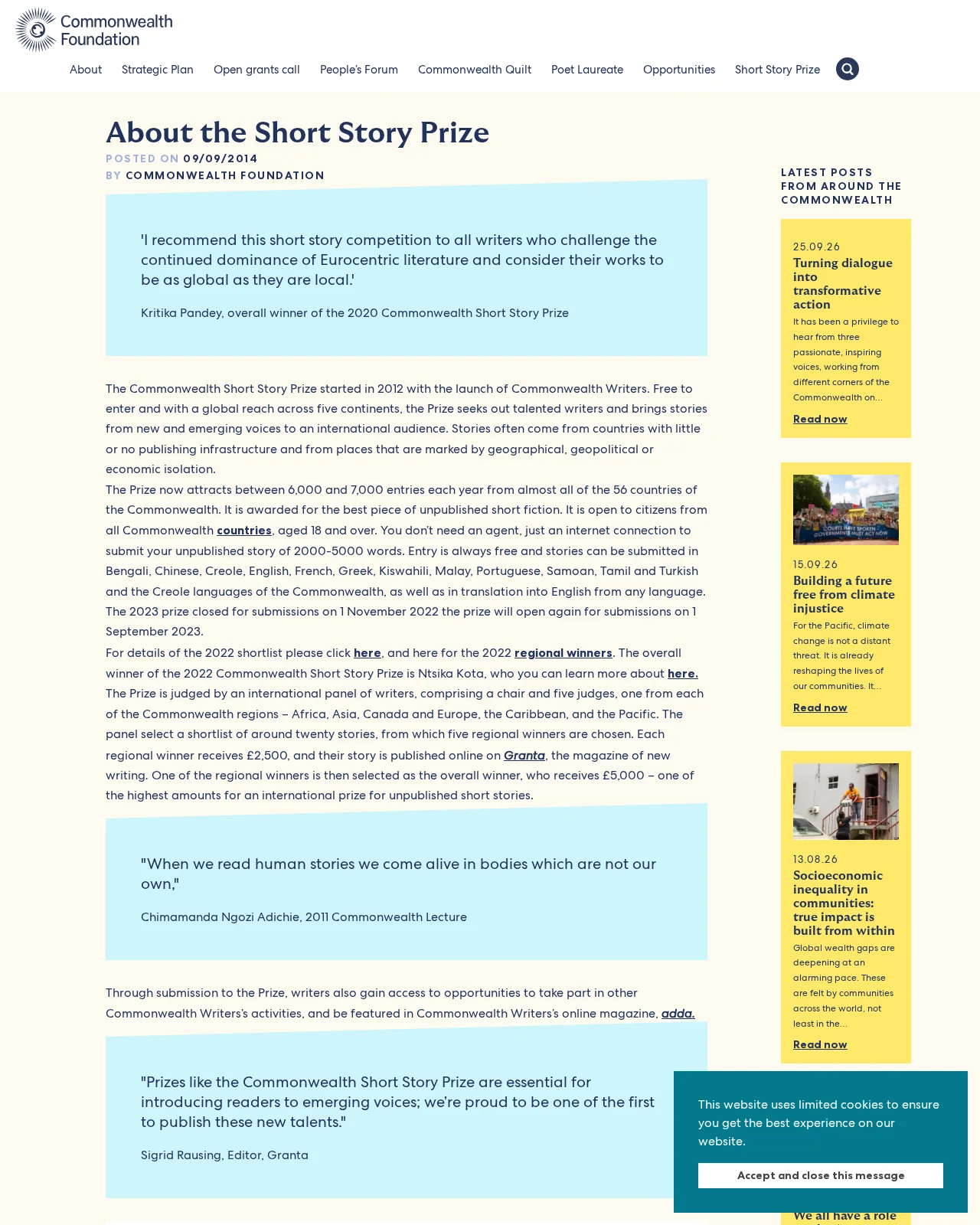
| Commonwealth Short Story Prize | Unpublished short fiction, 2,000–5,000 words | About page: £2,500 per regional winner, £5,000 overall winner (2027 rules under review) | Commonwealth citizens aged 18+. Several languages accepted |
| Wergle Flomp Humor Poetry Contest (Winning Writers) | One humor poem, up to 250 lines | $2,000 / $750 / $350, plus 10 honorable mentions of $200 ($5,100 total) | No age limit. All countries except Iran, North Korea, Crimea, Russia and Belarus |
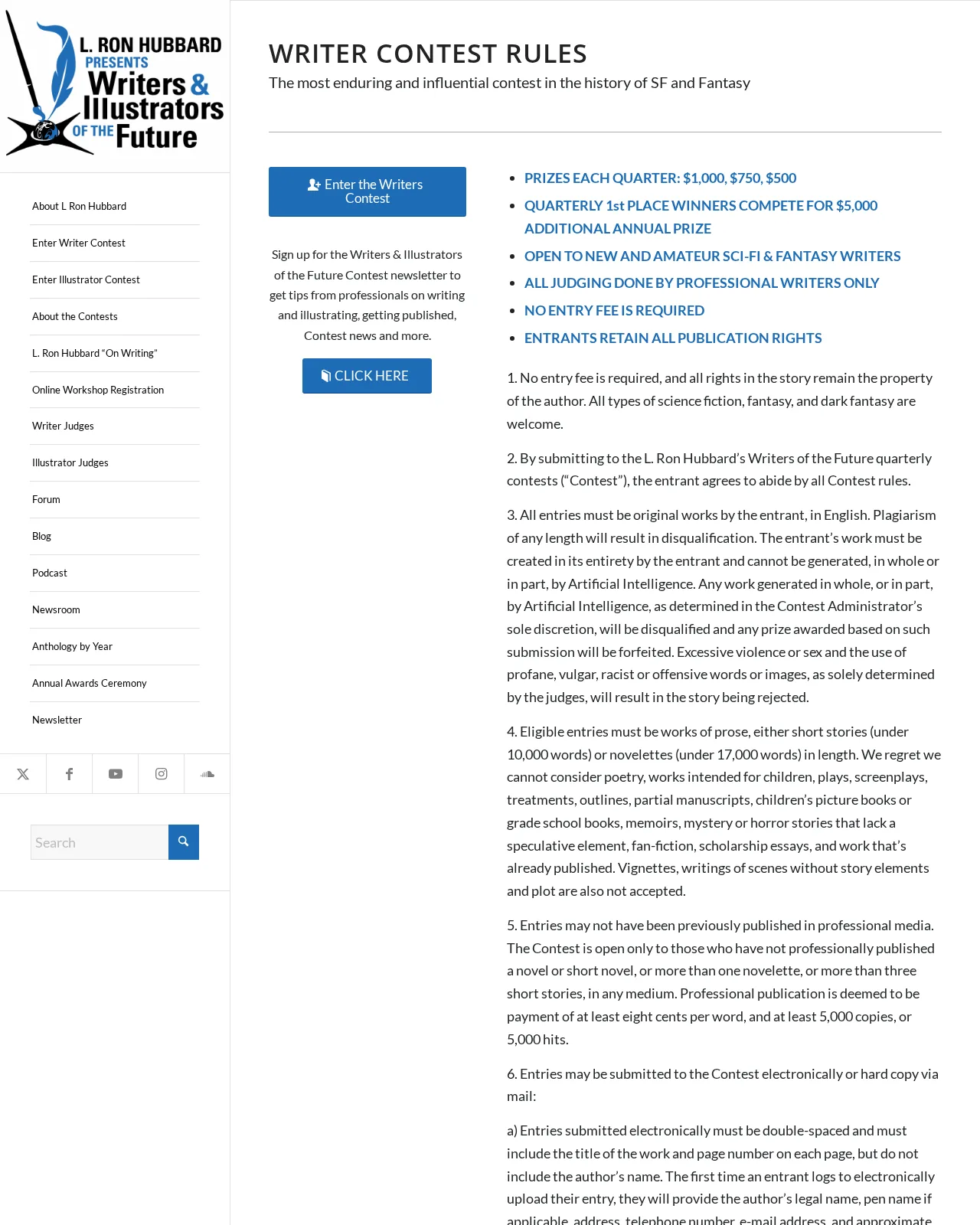
All three official pages state there is no entry fee.
3. Realistic expectations
- Only a few people win per quarter or per year. The Commonwealth about page says the prize receives 6,000–7,000 entries each year.
- Writers of the Future rule 19 says the odds of winning depend on the number of entries in a quarter.
- The Commonwealth Short Story Prize has postponed its 2027 opening to January 2027 while it reviews its rules and submission guidelines. You cannot enter it yet.
- All three restrict AI-generated work or have separate AI rules. The writing must be your own.
- Tax and money-transfer questions for foreign prizes are not covered on these pages; check them for your own country.
4. Pre-start checklist
- [ ] I confirmed on the official rules page that entry really costs nothing
- [ ] I meet the eligibility rules (age, citizenship, publication history)
- [ ] I checked length, genre and language limits
- [ ] I wrote the piece myself without AI-generated text
- [ ] I checked whether the piece counts as already published
The paid part covers each contest's detailed rules (deadlines, payment timing, rights), manuscript format and anonymous judging, official ways to find more free contests, warning signs in fee and rights clauses, common mistakes and a final checklist.
<!--PAYWALL-->
5. Writers of the Future (writers): detailed rules
From the official rules page (writersofthefuture.com/contest-rules-writers/):
- No entry fee; all rights in the story remain the author's (rule 1).
- Original work in English only. Work generated in whole or in part by AI is disqualified and any prize is forfeited (rule 3).
- Length: short stories under 10,000 words or novelettes under 17,000 words. Not accepted: poetry, children's work, plays and screenplays, memoirs, mystery or horror without a speculative element, fan fiction, already published work (rule 4).
- Eligibility: not open to anyone who has professionally published a novel or short novel, more than one novelette, or more than three short stories. Professional means at least eight cents per word and at least 5,000 copies or 5,000 hits (rule 5).
- Putting your name or contact details on the manuscript disqualifies it (anonymous judging, rule 6).
- Quarters: Oct 1–Dec 31, Jan 1–Mar 31, Apr 1–Jun 30, Jul 1–Sep 30. Entries must arrive by midnight Pacific Time on the last day; late entries roll into the next quarter (rule 8).
- Quarterly prizes $1,000 / $750 / $500 (US dollars), paid within 60 days of the winners being announced (rules 9–10).
- One of the four quarterly first-place winners gets an extra $5,000 grand prize (rule 11).
- The contest says it pays quarterly winners' travel and hotel to attend the ceremony (rule 12).
- One manuscript per quarter. Quarterly winners cannot enter again (rule 13). No revisions after submission (rule 14).
- Void where prohibited by law (rule 17).
6. Commonwealth Short Story Prize: detailed rules
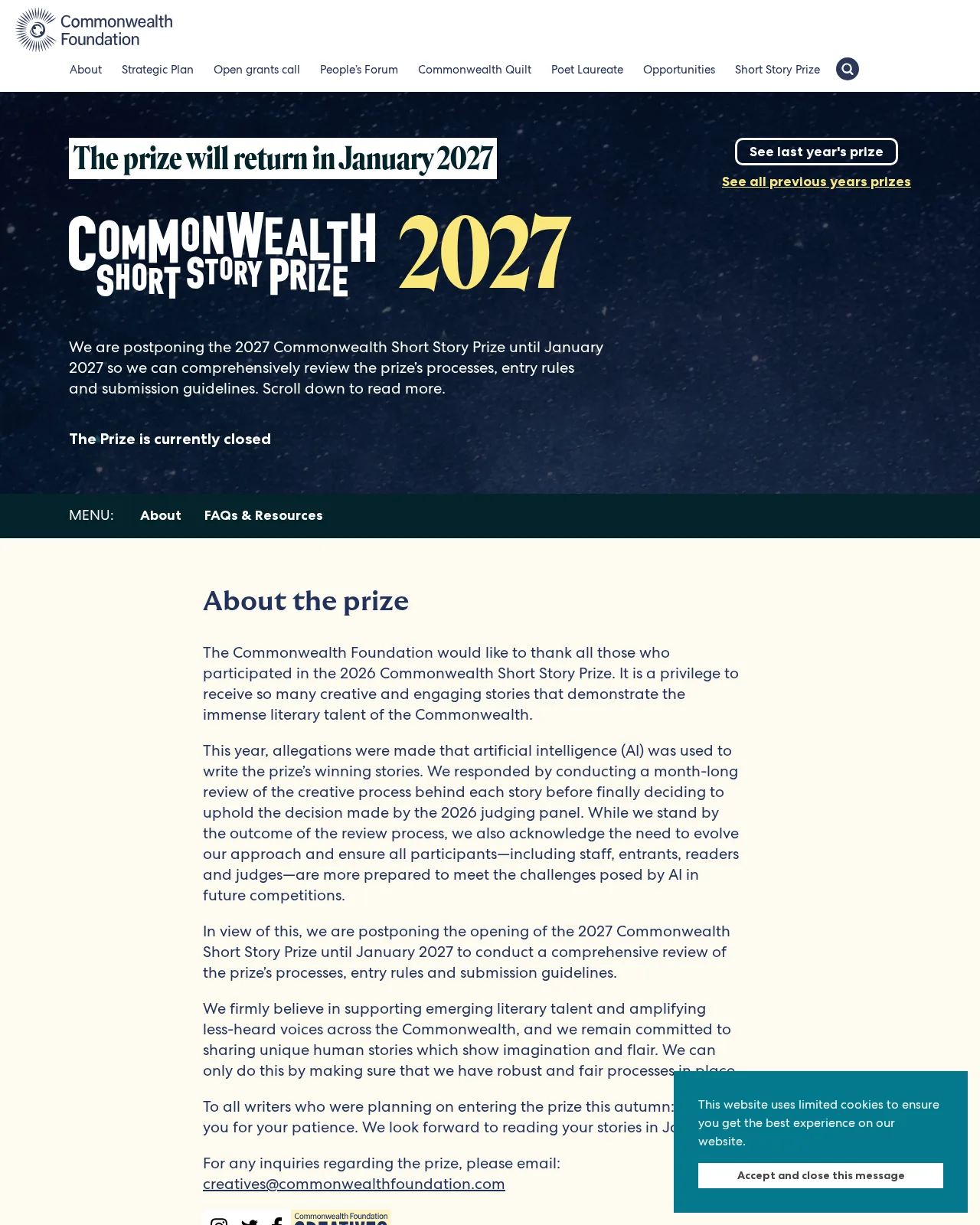
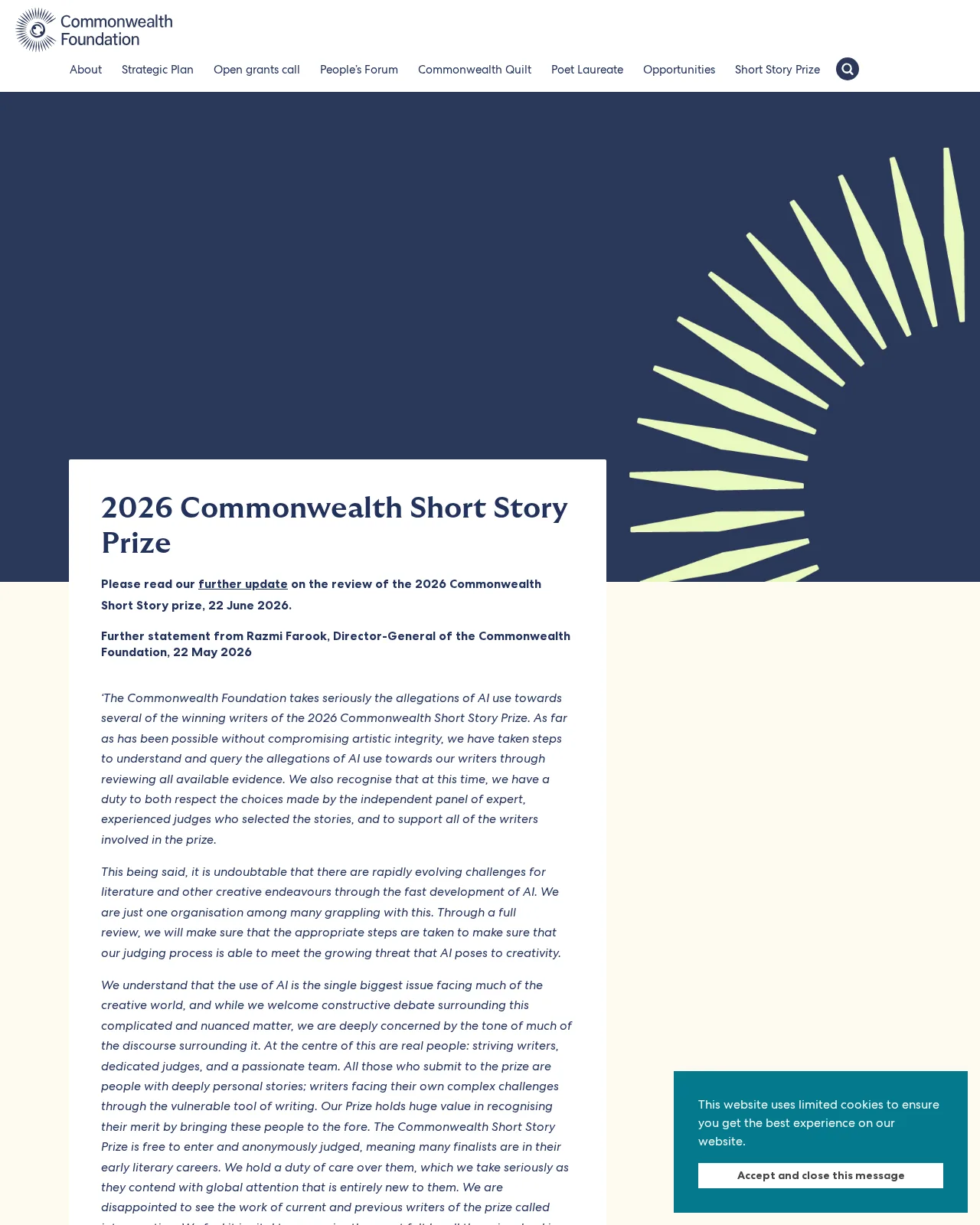
- Current status: the official page says the 2027 prize is postponed until January 2027 and "The Prize is currently closed." It says it is reviewing rules and submission guidelines after allegations that AI was used in 2026 winning stories.
- FAQ eligibility: Commonwealth citizens aged 18 and over. 2,000–5,000 words. Short fiction in any genre.
- Languages: Bengali, Chinese, Creole, English, French, Greek, Malay, Maltese, Portuguese, Samoan, Swahili, Tamil, Turkish. Translations into English from any language are accepted, and the translator of a winning story receives additional prize money.
- You cannot re-enter a story submitted in earlier years, and the story must be unpublished in print or online, except on personal websites.
- Judging: anonymous reading rounds → longlist of 200 → international panel → shortlist of about 25 → five regional winners → one overall winner. The page says entries are read by real people at every stage, not an AI system.
- Prizes: the about page (short-story-2) lists £2,500 per regional winner and £5,000 for the overall winner, with regional winning stories published online by Granta. That page also contains 2023 dates, so it may be outdated; 2027 prize amounts have not been announced.
7. Wergle Flomp Humor Poetry Contest (Winning Writers)
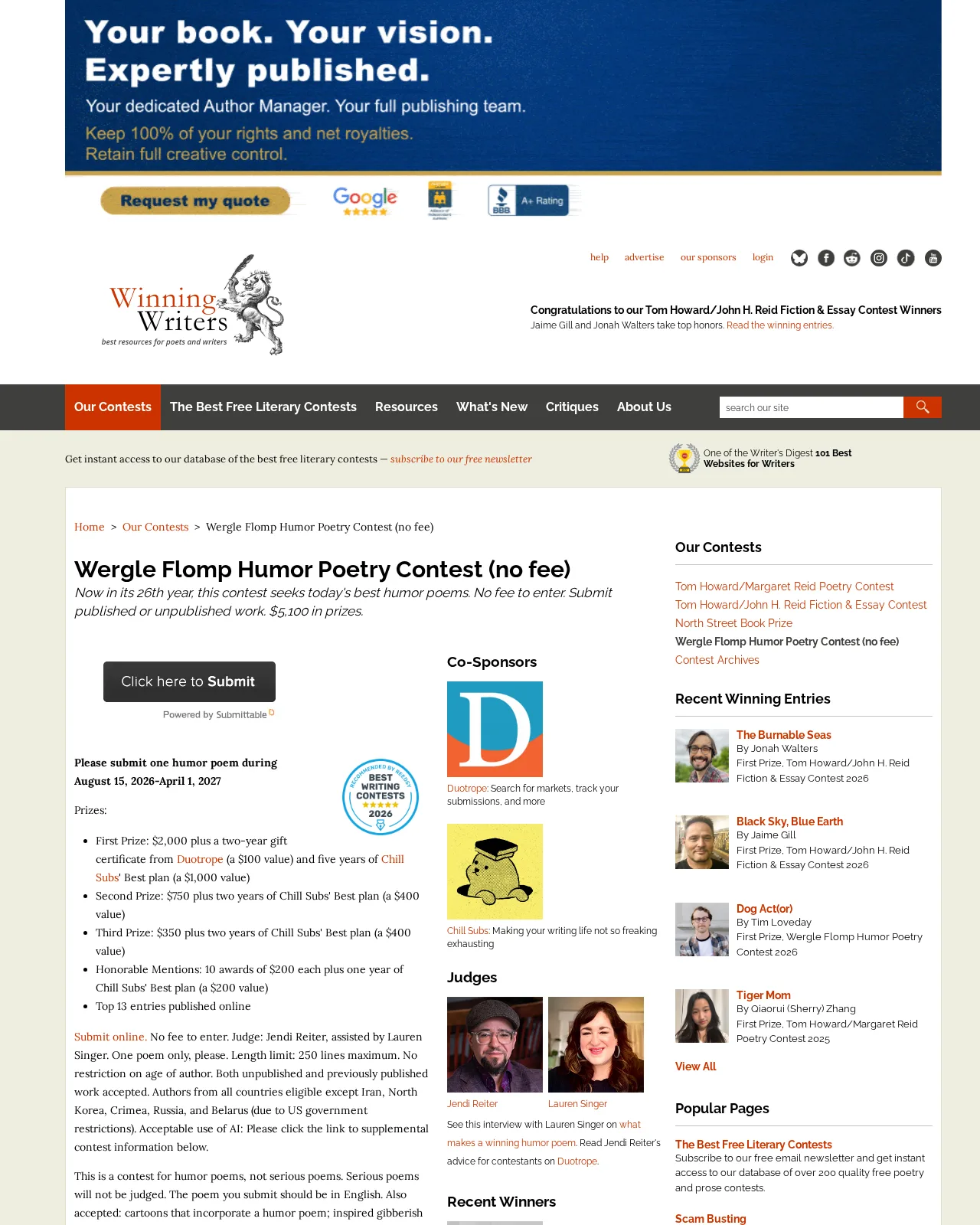
- No entry fee. One humor poem, 250 lines maximum.
- Prizes: first $2,000 (plus extras), second $750, third $350, 10 honorable mentions of $200 each. Top 13 entries published online.
- No age restriction. Published and unpublished work accepted. Authors in Iran, North Korea, Crimea, Russia and Belarus excluded (US government restrictions).
- Acceptable AI use is explained on a separate linked page. Read it before entering.
- Deadline shown on 2026-10-26: April 1, 2027. Results announced: August 15, 2027.
- It is an English humor poetry contest, so English writing ability is needed.
8. Official ways to keep finding free contests
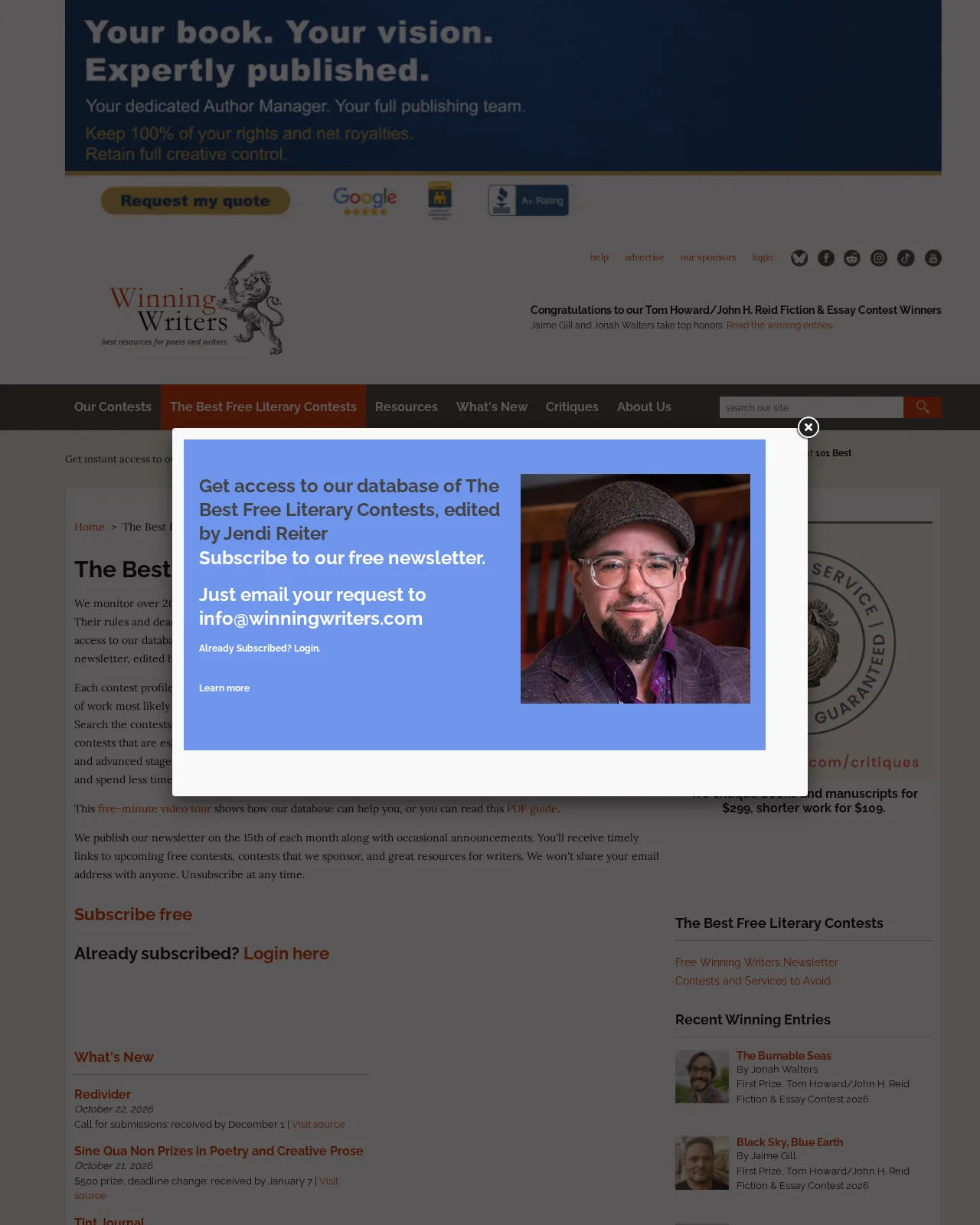
- Winning Writers says it monitors more than 200 poetry and prose contests with no entry fees and gives subscribers of its free newsletter (published on the 15th of each month) access to the database.
- Even for contests found on such a list, re-check the organizer's own page for fees, eligibility and rights.
9. Warning signs
- Entry fees: some, like Reedsy, state fees ($5, $20) and "no refund" in their FAQ. You can post to a profile for free there, but such stories are not judged or eligible for prizes.
- Rights: Reedsy says authors keep copyright but grant a non-exclusive, irrevocable, perpetual, worldwide licence. Writers of the Future says all rights remain with the author. Compare rights clauses.
- Payment method: Reedsy says cash prizes are paid via PayPal. Check payment method and currency for every contest.
- If the official page does not show the fee, prize, payment timing and rights, skipping it is the safer choice.
10. Manuscript preparation (rule-based only)
- Remove your name and contact details from the manuscript (Writers of the Future anonymous judging).
- Keep the word count inside the limits (e.g. 2,000–5,000 / under 10,000).
- Do not re-enter earlier submissions (Commonwealth); unchanged resubmissions are ineligible (Writers of the Future rule 13).
- Check the deadline time zone (Writers of the Future: midnight Pacific Time).
11. Common mistakes
- Confusing a free profile post with an official entry (Reedsy example).
- Posting the story on a blog or social media first and breaking the "unpublished" rule (Commonwealth allows personal websites only).
- Not checking eligibility (age, citizenship, publication history).
- Generating text with AI tools, which is grounds for disqualification.
- Trying to enter a contest that is not open yet (Commonwealth 2027).
12. Final checklist
- [ ] I re-opened the official rules page on the day I entered
- [ ] I noted the $0 fee, the prize amount, currency and payment timing
- [ ] I read the rights clause (copyright kept, scope of any licence)
- [ ] Length, genre, language and anonymous format match
- [ ] I converted the deadline to my own time zone
- [ ] I looked into tax and money-transfer rules for receiving a prize